
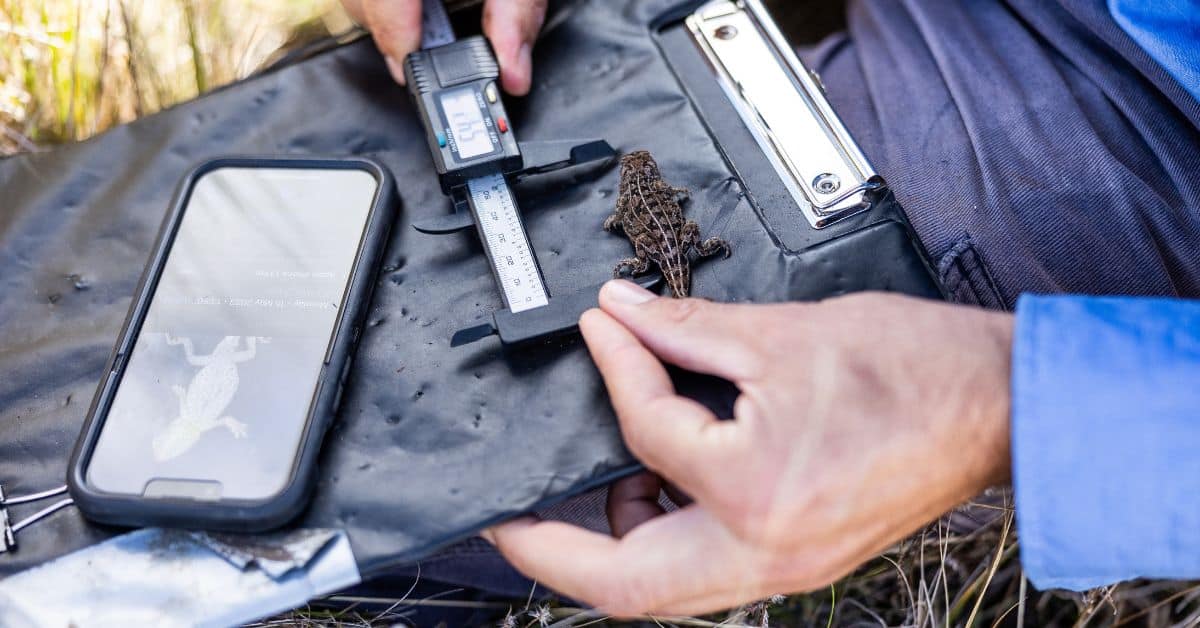
During the 2024 field season, the Alliance continued its annual monitoring of Tympanocryptis osbornei while also launching new initiatives to deepen our understanding of these elusive dragons.
Vegetation density has been gradually declining since the recent La Niña years, and this reduction in biomass appears to be improving capture rates. Several new dragons were recorded this season, alongside multiple recaptures from previous years. Excitingly, we documented dragons at a site where they had not been observed for the past three years, signalling their persistence and resilience.
However, the season also brought sombre news: Leon, our oldest known and most consistently captured dragon—a stalwart of the past five survey seasons—was not recorded this year. His absence suggests that he may have ventured to the “big grassland in the sky.” Leon’s legacy endures as a symbol of our monitoring efforts, having provided invaluable insights into the species’ longevity and resilience.
Jesse, an undergraduate researcher, conducted a groundbreaking study on the relationship between wolf spider burrow presence and dragon occupancy. The study found a positive correlation, emphasising the critical importance of burrows as habitat features for T. osbornei. To support this research, the Alliance began utilising an endoscope to examine spider burrows, a novel technique that is already yielding insights. These findings are being prepared for publication to advance our understanding of the species’ habitat use.
The 2024 season also saw a significant decline in snake observations compared to previous years, likely linked to reduced vegetation biomass. This change could have far-reaching implications for predator-prey dynamics within the grassland ecosystem, highlighting the need for further investigation into these interactions.
There is always plenty of non-field work to do in the off season so the team are chomping at the bit to get back to our monitoring sites this autumn to see how our dragons have fared. So, stay tuned for more exciting future updates in 2025!