
Australia’s Bathurst Grassland Earless Dragon is on the brink of becoming mainland Australia’s first extinct reptile, and the Alliance is in a race against time to locate this elusive species. Last spotted in the mid-1990s, this tiny dragon (Tympanocryptis mccartneyi) faces grim odds, with just 1% of its preferred habitat remaining.
A Different Rediscovery Sparks Hope for the Bathurst Dragon
The rediscovery of the Victorian Grassland Earless Dragon earlier this year has sparked hope among conservationists. Previously thought extinct since 1969, the Victorian dragon was found clinging to survival in a small, isolated habitat. This discovery highlights the resilience of these tiny creatures and serves as a reminder that targeted conservation efforts can work! For the Alliance, it’s proof that even the most dire situations can turn around, fueling our determination to locate and protect the Bathurst dragon before it’s too late.
The Bathurst Dragon’s Future Lies in the Hands of the Local Community
Engaging Bathurst landowners in the search is the only way we have a chance of rediscovering this tiny dragon. A major challenge is addressing landowners’ fears that having endangered species on their property might restrict their land use. To ease concerns and emphasise that the dragons’ habitat aligns with healthy agricultural practices, we held a community event in Bathurst to spread the word and get locals excited about their unique local dragon.

President of the Alliance, George Madani, wants landowners to know that “If dragons occur on your property, it probably means you’re doing a good job managing the land, proper grazing regimes that balance open grasslands with shelter are key to preserving their environment.”
Fellow Alliance member Tim McGrath also feels it’s important to commend anyone who finds dragons on their property, “Their presence signals a thriving ecosystem, and farmers should see that as a badge of honour.”
Predicting Where the Bathurst GED Could be Hiding
Refining survey locations is up to Alliance member Ted Stein from the University of Newcastle. His honours project combines fieldwork, historical knowledge, statistical software and online databases to create a predictive model of likely habitat areas. The hope is that when the Alliance team use this model in conjunction with the local community knowledge, they’ll hit the jackpot and find the Bathurst dragon hiding out.
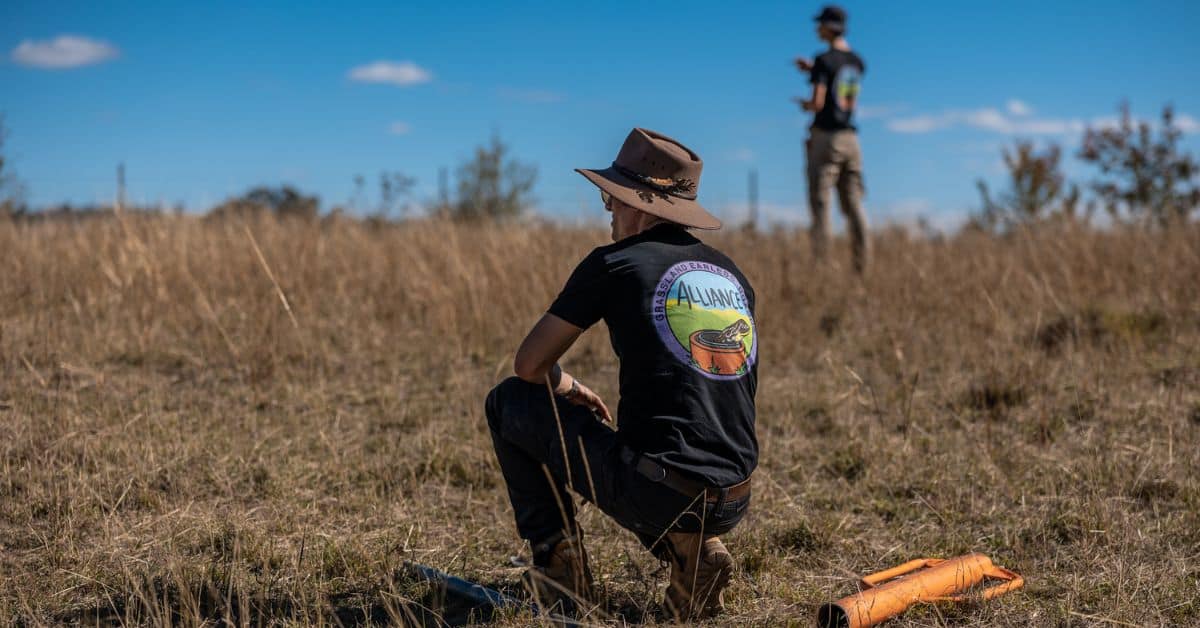
The Search Begins: Setting Up Field Sites
Last year, Alliance president George and vice-president Chad, published a scientific paper on enhancing the detection probability for GEDs. That paper and the Monaro fieldwork are being used as a blueprint to give the team the best chance to find this cryptic dragon.
The work isn’t over though! These were just the first few survey sites to set up and the team need many more to give us the best chance at rediscovering the Bathurst GED. Even with survey sites set up, George and Chad’s work shows that, in the Monaro, where they already know there are dragons, it can take up to 30 checks of a site to even be sure they are there. Considering the search for the Bathurst dragon has so many additional unknowns, the Alliance are preparing for a long term monitoring project.
We Still Need Your Help
The take home message here is that we are in this for the long haul, and we need your help if we have any hope of succeeding! If you think that you might have dragons on your land, send us a message and we can organise to have a chat. If you don’t think your property is suitable, be sure to spread the word to friends and neighbours. You might just know someone who has these elusive little creatures on their property!